
I want AI to become a lasting partner in how I think and live. A partner that understands what I’m pursuing, remembers what I’ve learned, and helps me carry ideas and conversations forward while leaving the decisions with me.
That is the vision behind Maya, the personal agentic operating system I’m building.
Our interaction starts with conversation, typed or spoken. Behind it is a more connected view of my reading, relationships, commitments and unfinished work. The ambition is continuity: to pick up a thought where I left it, see connections I might have missed, and turn understanding into useful action.
I bring intent, judgment and responsibility. Maya helps me remember, connect and follow through.
That vision starts with familiar moments: a conversation whose significance I remember more clearly than its details, an idea I want to return to, or a commitment that needs more than a reminder. I want those threads to stay connected as life moves on.
Before the invitations go out
Imagine I’m helping organize a community event. The planning starts on a WhatsApp call, recorded with everyone’s consent. Someone suggests Saturday, and a venue sends its availability by email. At a later planning meeting, captured with everyone’s agreement, we consider Sunday because two volunteers can’t make Saturday.
A few days later, an invitation arrives for review: Sunday afternoon, with the venue’s address underneath. Someone asks, “Ready to send?”
It looks right. Sunday is what I remember discussing.
Before replying, I ask Maya to bring the plans together. The venue’s email confirms Saturday, and our meeting notes make Sunday conditional on a change we haven’t confirmed.
I ask the venue about Sunday and hold the invitation. I can reply to the person waiting on me without asking them to reconstruct the whole discussion.
When Maya helps me reply
That imagined exchange shows the partnership I’m building toward. Maya brings the missing connection into view; I decide what happens next. A useful reply carries the history of the conversation, including the condition that never made it into the latest document.
Take the simple example I use: “When is a good time for a call?” If Maya helps me prepare it and I send it, the attribution is “Drafted with Maya, sent by Ajith.” I read the message and take responsibility for approaching the other person.
If I authorize Maya to reply independently, the recipient should know they are speaking with my digital twin and have a way to reach me. I would also need a record of what was sent in my name.
The people behind the messages
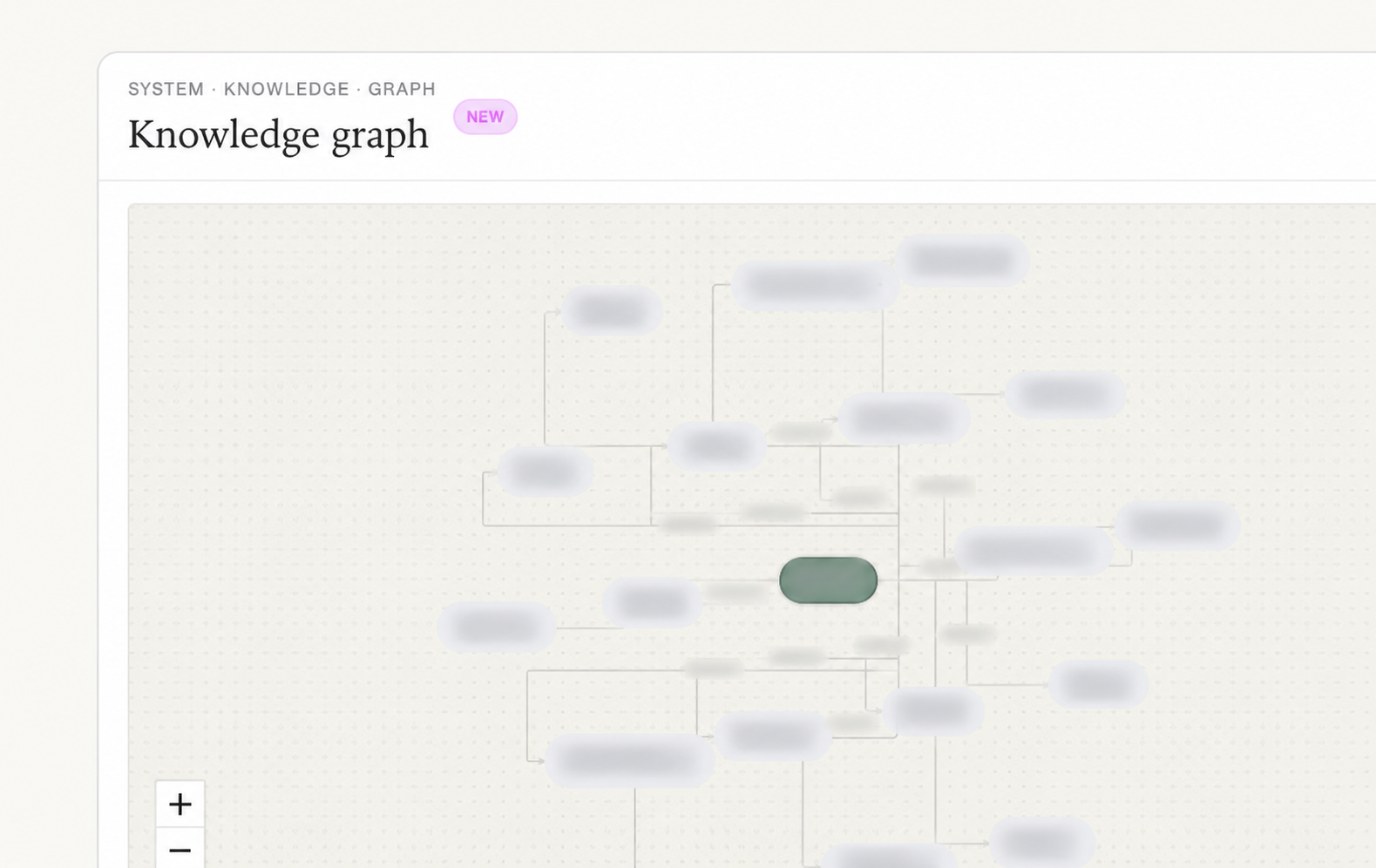
I think of Maya as the keeper of my memory. Relationships are part of that memory: what we discussed, what I promised, and what has changed since we last spoke. An email and a meeting may be parts of the same conversation even when they are weeks apart.
I also change my mind. Remembering an old preference is only helpful if I can correct it or make an exception. I need Maya to understand what I mean now and let me question what it thinks it knows, a problem I explore in my Personal Cognitive Digital Twin writing.
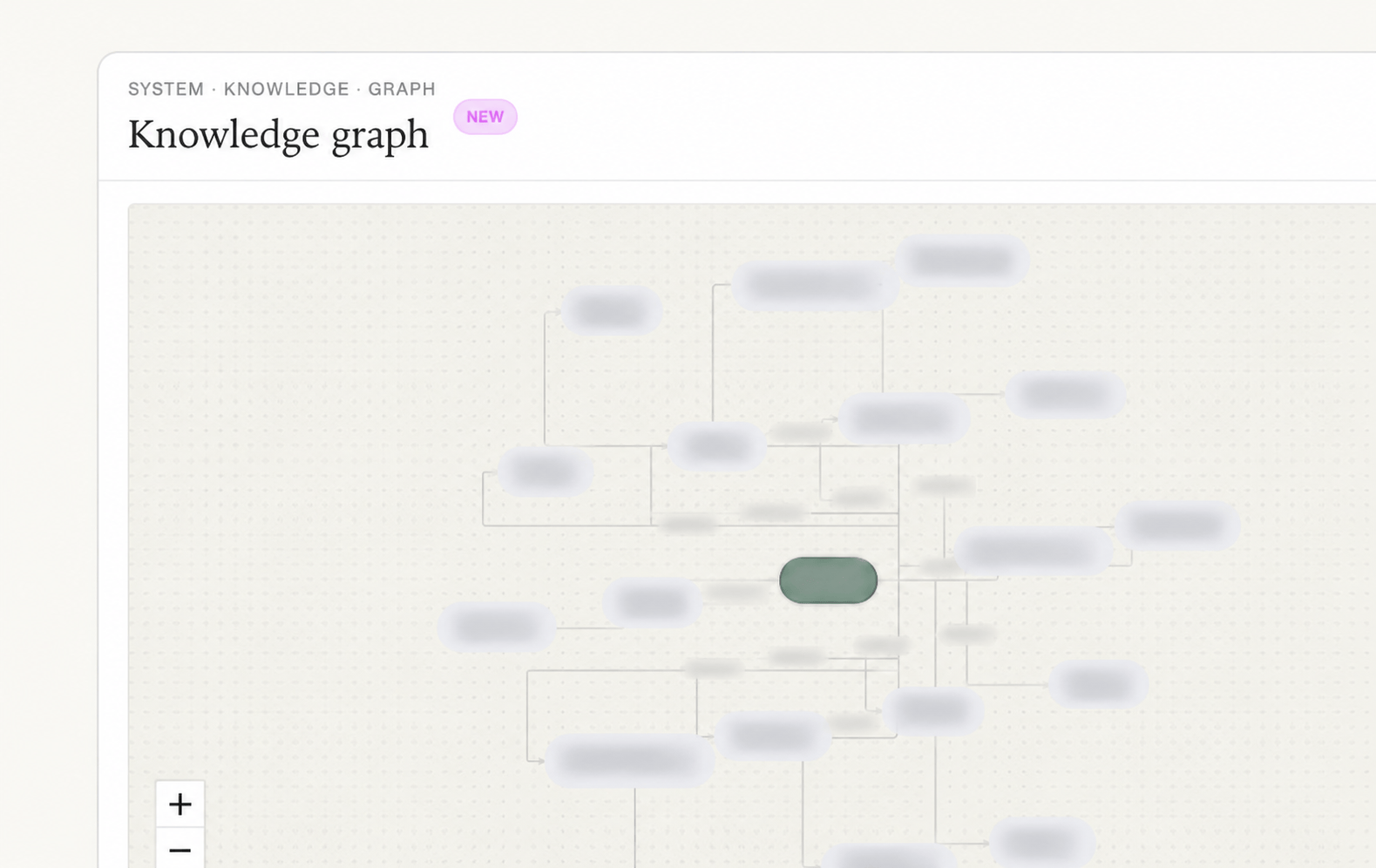
Open the full-size knowledge-graph screenshot.
A thought worth returning to
I cannot read every relevant paper and article, watch every useful video, or listen to every podcast. Even when I do get to something, I may only see its relevance to my work much later.
Imagine I’m writing about human oversight of AI and keep returning to “A person should review the decision.” I remember a video that challenged that reassurance and a paper I wanted to examine alongside it. I ask Maya to bring them back into the conversation with my draft.
I still have to read the sources. If the paper doesn’t support the argument, I need to know that before I use it. I want Maya to help me question what I was about to write, as well as find material that supports it.

Open the full-size learning-library screenshot.

Work that carries on
Some things take longer than a chat. Maya’s pursuits give ongoing work a place I can return to, so I can see what has moved forward and what is waiting for me.
As the tools and tasks change, the skills behind that work need testing, revision, or retirement. Having a skill available does not settle whether I want it used; my Progressive Capability Discovery article works through those choices.
A system I can keep
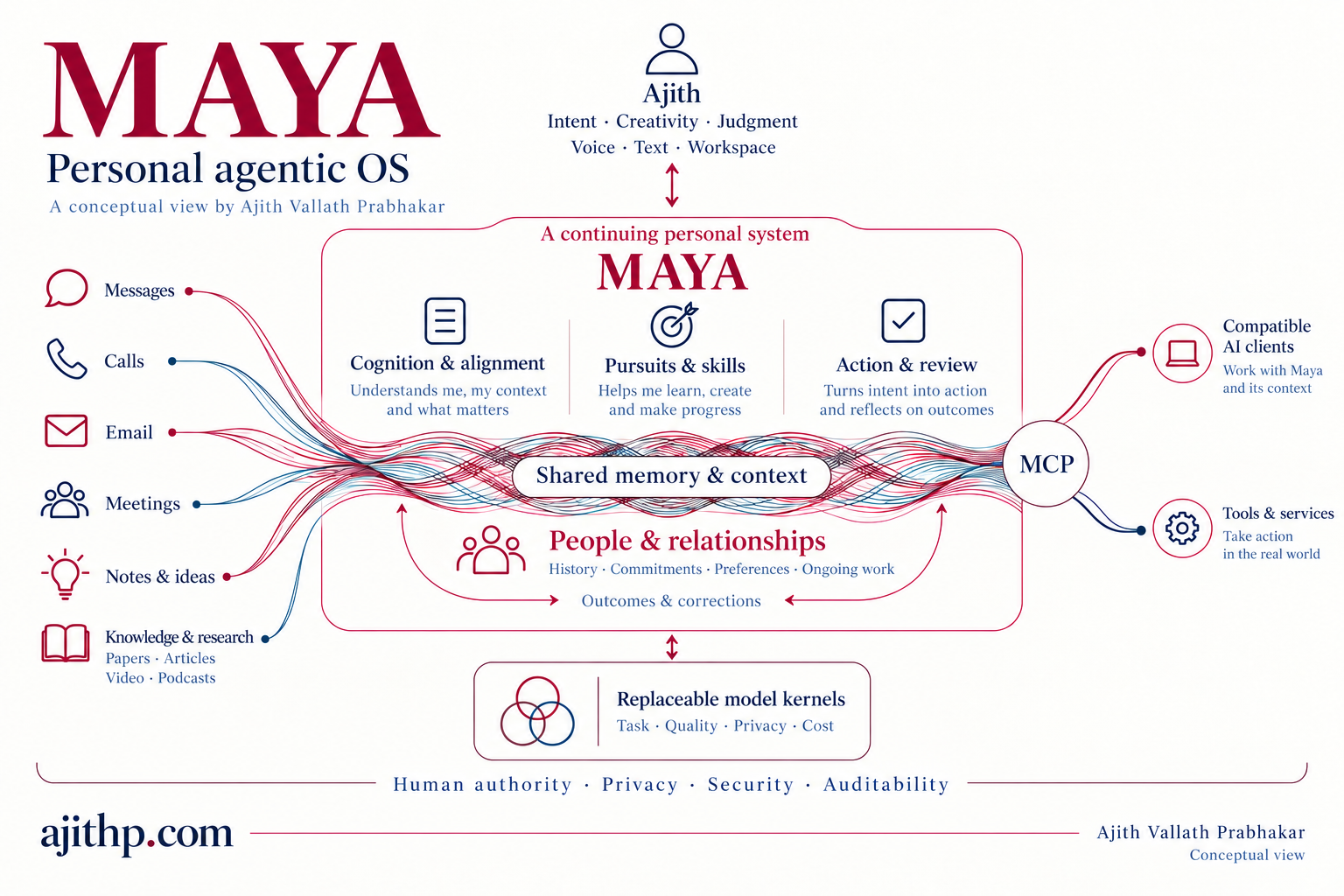
I treat models as replaceable kernels. I don’t want my memory, relationships, or unfinished work to start again each time a different model becomes useful.
Maya connects to compatible tools and services through the Model Context Protocol (MCP), while cost-aware routing helps choose a model for the work.

Open the full-size Maya diagram.
A question I haven’t finished with
Building Maya has drawn me into another question: could I take an existing AI model and reshape it into something smaller, useful enough to become part of a personal system?
That led me to explore quantum-inspired tensor methods, what an adapted model might lose, and whether the result would be worth using. The experiment is unfinished. I’m still interested in finding out.
Why I keep building
I keep building Maya because I want more continuity in how I think, more care in how I respond, and more room to follow an idea through. Less time recovering the thread, more time carrying it forward, with the freedom to question Maya and change my mind.
If this connects with something you’re thinking about, I’d like to hear from you.
The personal OS workbook has four fillable pages exploring intent, memory, permissions and the work that returns to a person. Use the communication example to decide what the system may remember, propose and act on.
Last revised October 19, 2026.
You must be logged in to post a comment.